As a supplier of Grain Woven Bags, ensuring the leak - proof quality of our products is of utmost importance. Grain is a valuable commodity, and any leakage during storage or transportation can lead to significant losses for our customers. In this blog, I will share several effective methods to check if a grain woven bag is leak - proof.
Visual Inspection
The first step in checking a grain woven bag for leak - proofness is a thorough visual inspection. Examine the entire surface of the bag for any visible defects such as holes, tears, or weak seams. Even the smallest hole can lead to grain leakage over time.
Start by looking at the fabric of the woven bag. The woven pattern should be uniform and tight. Irregularities in the weaving can indicate areas where the bag may be more prone to leaks. Check the edges of the bag, especially where the seams are joined. Seams should be well - stitched or heat - sealed, depending on the manufacturing process. Any loose threads or gaps in the seams are clear signs of potential leakage.
Also, inspect the corners of the bag. Corners are often under more stress during handling and can be vulnerable points. If there are any signs of fraying or damage in the corners, it is likely that the bag will not be leak - proof.
Pressure Test
A pressure test is a reliable way to determine if a grain woven bag can withstand the pressure exerted by the grain inside and prevent leakage. To conduct a pressure test, you can fill the bag with a known quantity of grain or a similar granular material.
Place the filled bag on a flat surface and gradually apply pressure to the top of the bag. You can use weights or a mechanical press to apply the pressure evenly. Observe the bag closely for any signs of grain escaping from the sides, seams, or bottom.
If the bag is leak - proof, it should be able to hold the pressure without any visible leakage. However, if you notice even a small amount of grain coming out, it indicates that the bag has a leak. You can repeat the test with different levels of pressure to simulate various storage and transportation conditions.
Water Test
The water test is another simple yet effective method to check the leak - proofness of a grain woven bag. Although grain is not water, the test can help identify any gaps or holes in the bag that could potentially lead to leakage.
First, seal the bag tightly, leaving only a small opening at the top. Then, pour a small amount of water into the bag through the opening. Make sure to seal the opening completely after pouring the water.
Gently shake the bag to distribute the water evenly inside. Place the bag on a clean surface and observe if there are any water droplets or wet spots on the outside of the bag. If there are, it means that the bag has a leak.
This test can also be used to check the integrity of the seams. If water is seeping out from the seams, it indicates that the seams are not properly sealed and need to be reinforced.
Grain Flow Test
The grain flow test focuses on how the grain moves inside the bag and whether it can escape through any potential leaks. Fill the bag with grain and then tilt the bag slowly from one side to the other.
Observe the flow of the grain inside the bag. If the grain flows smoothly and there is no sign of it getting stuck or escaping from the sides, it is a good indication that the bag is leak - proof. However, if you notice any blockages or grain coming out of the bag during the tilting process, it means that there are leaks in the bag.
Compatibility with Grain Type
It is important to consider the type of grain that will be stored in the bag when checking its leak - proofness. Different grains have different characteristics, such as size, shape, and moisture content, which can affect the performance of the bag.

For example, fine grains like rice or wheat flour may require a bag with a finer weave to prevent leakage. Coarser grains like corn or soybeans may be less likely to leak through larger holes, but they can still cause problems if the bag is not properly sealed.
As a supplier, we offer a variety of Grain Woven Bags to meet the specific needs of different grains. Our Valve Woven Bags are designed for easy filling and are suitable for a wide range of grains. Our Potato Woven Bags are specifically designed to handle the unique requirements of storing potatoes and other root vegetables. And our Green PP Woven Bags are made from high - quality materials and are ideal for storing grains in an environmentally friendly way.
Quality Control in Manufacturing
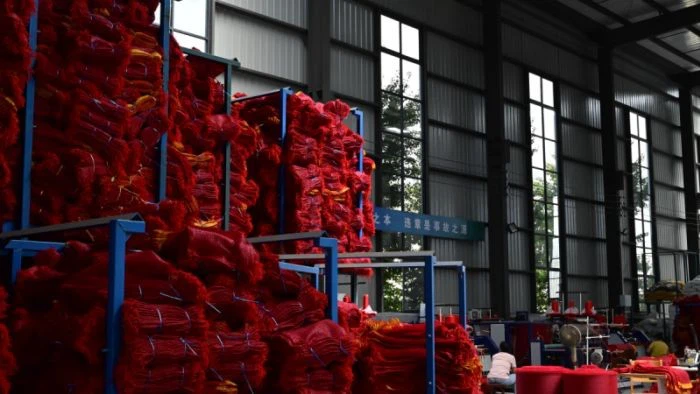
At our company, we implement strict quality control measures during the manufacturing process to ensure that all our Grain Woven Bags are leak - proof. We use high - quality raw materials and advanced manufacturing techniques to produce bags with strong seams and a tight weave.
Our production line is equipped with state - of - the - art machinery that can detect and correct any potential defects in the bags. We conduct regular inspections at every stage of the manufacturing process, from the weaving of the fabric to the final assembly of the bag.
Before the bags are shipped to our customers, we perform a final quality check using the methods mentioned above. This ensures that only leak - proof bags leave our factory and reach our customers.
Conclusion
Checking the leak - proofness of a grain woven bag is essential to ensure the safe storage and transportation of grain. By using a combination of visual inspection, pressure test, water test, grain flow test, and considering the compatibility with the grain type, you can accurately determine if a bag is leak - proof.
As a supplier of Grain Woven Bags, we are committed to providing our customers with high - quality, leak - proof bags. Our products, such as Valve Woven Bags, Potato Woven Bags, and Green PP Woven Bags, are designed to meet the diverse needs of the grain industry.
If you are in the market for Grain Woven Bags, we invite you to contact us for a detailed discussion about your requirements. We can provide you with samples for testing and offer competitive pricing and excellent customer service. Let's work together to ensure the safe and efficient storage and transportation of your grain.
References
- "Packaging Technology for Agricultural Products", John Wiley & Sons
- "Quality Control in Woven Bag Manufacturing", Industrial Press Inc.